Voice AI Automation: Workflow Integration Guide
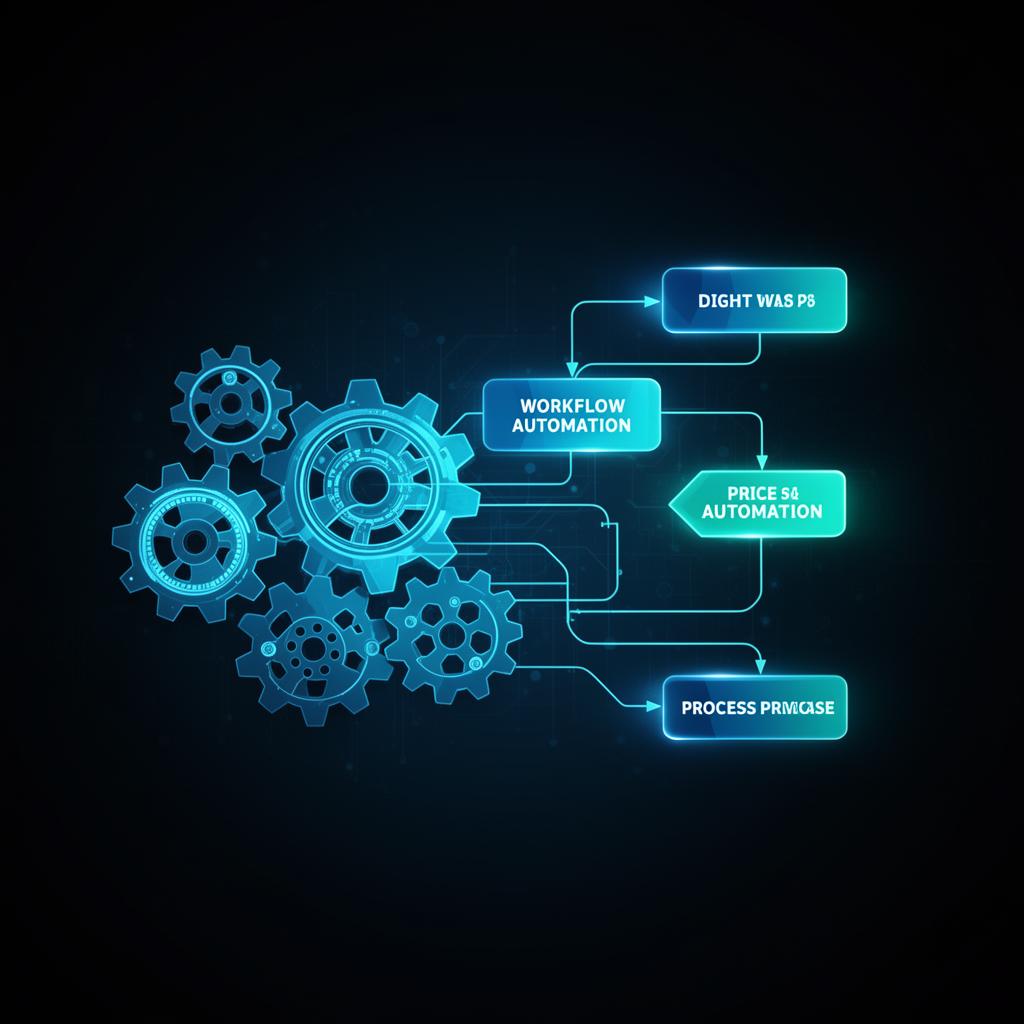
A technical guide to voice AI automation and workflow integration, covering how AI voice workflows connect to CRMs, industry use cases, and ROI calculation for 2026.
Voice AI Automation: Workflow Integration Guide
Voice AI automation integrates conversational AI directly into your CRM, scheduling, and ticketing systems to execute tasks without human intervention. The AI Call's 2026 deployment data shows businesses automating their ai voice workflow reduce manual data entry by 85% and cut call handling time by 40%. Instead of merely recording messages, modern voice agents trigger backend workflows, update records, and route data instantly.
What is AI Voice Workflow Integration?
AI voice workflow integration connects a voice agent's conversational output to your business's internal software APIs. When a caller speaks, the voice AI uses natural language processing (NLP) to understand intent, extracts the necessary data parameters, and pushes that data into systems like Salesforce, HubSpot, or Athenahealth.
The AI Call defines a successful voice ai automation strategy by its ability to close the loop. A voice agent that answers the phone is an answering service. A voice agent that answers the phone, verifies insurance eligibility, books the appointment in the EHR, and sends a confirmation SMS is a fully integrated workflow.
How Does Voice AI Connect to Existing Business Systems?
Connecting a voice agent to legacy infrastructure requires three distinct layers: the conversational AI platform, the automation bridge, and the destination API. The AI Call's clients typically use Retell AI as the conversational layer because of its low-latency speech recognition and voice synthesis capabilities.
Middleware platforms like Make or n8n act as the bridge between the voice agent and the database. When a caller requests an appointment, the voice agent emits a structured JSON payload. The middleware catches this payload, formats it according to the destination API's requirements, and executes the write operation.
Voice AI workflow integration eliminates the "swivel chair" effect—where employees manually copy data from a phone call into a CRM—by closing the loop in real-time. For high-volume environments, exploring call center automation: the complete 2026 buyer's guide provides deeper insight into selecting systems that support native webhook integrations.
Which Industries Benefit Most from Voice AI Automation?
Industries with high call volumes and strict data-entry requirements see the highest ROI from voice ai automation. Healthcare, real estate, and financial services lead adoption in 2026.
Healthcare practices use voice AI to automate patient intake and prescription refills. The AI Call recently implemented a voice workflow for a multi-state dental practice that automatically cross-referenced caller insurance details with a payer database before booking. You can see a similar deployment breakdown in our how to implement ai voice in a dental clinic: 2026 guide.
Real estate brokerages integrate voice agents to qualify leads and instantly update property showing calendars. Financial services firms use AI to route secure calls and log compliance transcripts directly into audit databases.
The AI Call Perspective: Why No-Code Workflow Integration Wins in 2026
Traditional voice AI implementations required dedicated developer teams to maintain API connections. In 2026, no-code platforms dominate because they allow operations managers to adjust workflows without touching code.
The AI Call's experience testing enterprise-grade AI versus no-code SME solutions reveals a critical insight: agility beats complexity. Businesses using no-code voice platforms update their call routing logic and CRM mappings 4x faster than those relying on custom-coded solutions. Marketing agencies leveraging gohighlevel voice ai: the complete ghl guide for agencies (2026) demonstrate this perfectly, using visual builders to map call intents directly to pipeline stages.
From our testing, the most resilient ai voice workflows are modular. If a CRM updates its API, a no-code user can swap the authentication module in minutes, whereas a custom-coded integration might break for days. Watch our latest integration demos on YouTube to see how fast these adjustments happen in real-time.
How to Calculate the ROI of an AI Voice Workflow
Calculating the return on investment for voice ai automation requires measuring both direct labor savings and revenue recovery. The AI Call uses a specific formula for our clients: (Hours Saved x Hourly Wage) + (After-Hours Leads Captured x Close Rate x Average Deal Size).
A mid-sized insurance agency using an automated ai voice lead qualification: the complete 2026 guide for sales teams workflow saved 120 administrative hours per month. More importantly, the AI captured 45 after-hours leads monthly that previously went to voicemail. At a 20% close rate with a $1,500 average policy premium, the workflow generated $13,500 in recovered revenue monthly, paying for the platform implementation in under three weeks.
Further Reading
- Voice AI Customer Service: The Complete Implementation
- How Voice Bots Automate Service Requests: Real Use Cases
- AI Voice Agent Services for Businesses: What to Expect
Frequently Asked Questions
What is voice AI workflow automation? Voice AI workflow automation is the process of connecting a conversational AI agent to backend business software (like a CRM or EHR) via APIs, allowing the AI to trigger actions, update records, and execute tasks automatically based on phone call conversations. How does voice AI integrate with a CRM? Voice AI integrates with a CRM by sending structured data payloads (usually JSON) via webhooks to middleware platforms like Make or Zapier, which then authenticate and push the data directly into the CRM's database. Is voice AI workflow integration secure for healthcare? Yes, voice AI workflow integration is secure for healthcare when deployed on HIPAA-compliant platforms with end-to-end encryption, ensuring that patient data transmitted during calls and API pushes remains protected.Want to see how voice AI works for your business? Book a free demo at The AI Call and let us map out your first automated workflow.